
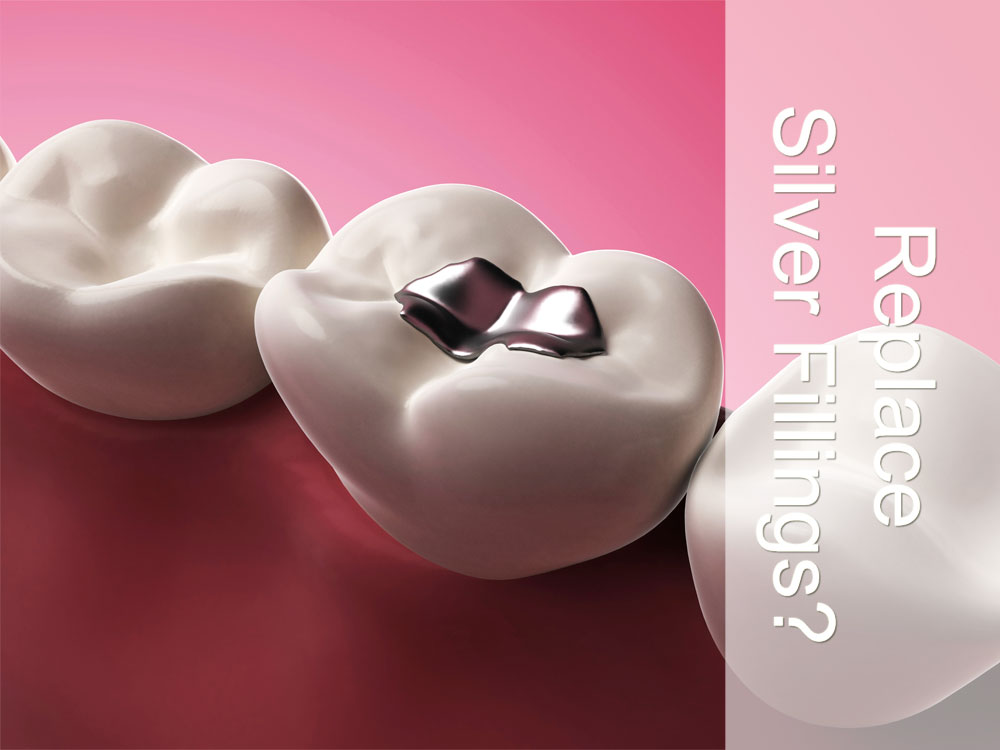
This is a question we get a lot at our dental office due to the dark unappealing esthetics of the material and some discussions on mercury toxicity.
What are silver fillings made of?
Silver fillings are made of Amalgam. The word amalgam can mean a mixture or blend. In the case of dentistry, an Amalgam is a mixture of mercury and another metal. It often is referred to as the silver filling material.
So, what’s the problem?
Amalgam has been used in dentistry since the 1800’s. There have been claims of it being harmful to the human body and the environment since the 1840’s. However, there has not been any conclusive evidence as of yet that Amalgam is harmful to the body and leaks mercury into the system. Although Amalgam itself has its benefits and disadvantages, most dentists are using more composite, or white, filling material and less Amalgam these days.
Silver Fillings – Benefits and Drawbacks
Benefits of Amalgam include:
-
When patients saliva is hard to control during the filling
-
When patients bleeding is difficult to manage
-
Amalgam is strong
-
Inexpensive
-
Relatively easy to use
In addition to the items mentioned above, Amalgam fillings can last a very long time (tens of years). We often see patients come in with really old amalgam fillings that still appear to be holding up well.
Drawbacks to Amalgam fillings include:
-
Decay under filling
-
Fracture lines on teeth
-
Looks
Due to these fillings lasting so long, there may be decay brewing underneath the filling that is blocked out in the x-rays by the material. We typically don’t find out there is decay until it has made its all the way to the nerve.
we tend to see a lot of fracture lines on these teeth that have had large silver fillings in them for years which have slightly expanded and, in addition to all the biting/grinding forces over the years, have started to create fracture lines in the teeth. Many of these filling will endure these forces and often the tooth itself fractures around the filling.
Compared to tooth colored fillings, Amalgams fillings are easy to spot in your mouth and do not look as good.
Tooth Colored Fillings
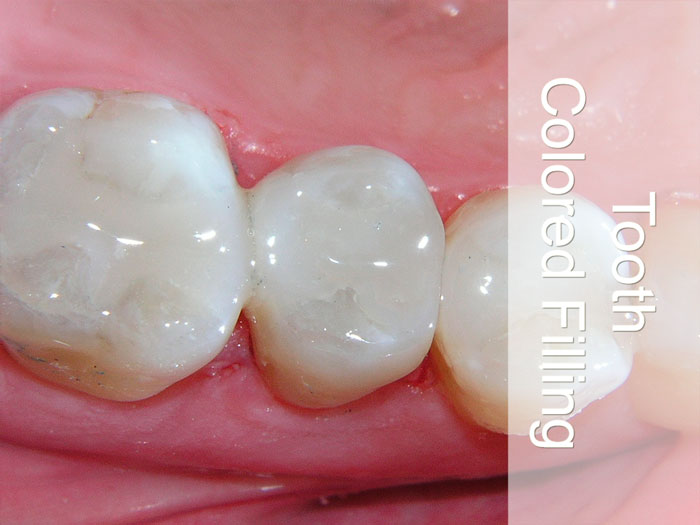
Composite, or tooth colored fillings, are different in their qualities in that they are bonded in the tooth. Basically this means that a substance is used between the filling and the tooth to create little micro bonds between the tooth and the filling. This is beneficial because it helps distribute the forces on the entire tooth better that with amalgam.
Composite is also esthetically much more appealing. It has different textures and shades that can be matched very precisely to your natural tooth color. The strengths of these materials is getting so much better and more durable over time.
As with anything in life it must be maintained and possibly changed out over time as the margins become stained and chipped. I personally prefer the fillings to break and be replaced than to have the tooth itself break. You can also see potential decay as it grows under or around the filling clearer due to the light color of the filling.
With each material having clear benefits and certain disadvantages, it is up to the patient to make an informed decision on whether or not they want to replace all of their amalgam fillings with white fillings. The reason may simply be due to esthetics and wanting to camouflage your fillings so that they will not be visible to everybody who sees you smile. Or possibly you want to be proactive in your dental health and want to replace old fillings that may be hiding some unwanted bacteria in its shadows.
The safety hazards of these fillings have not yet been clearly proven. So as long as you know your dentist uses proper safety precautions like proper isolation while placing or removing the filling, high speed suction, and proper disposal of the material, you should be in good hands. May you have a healthy, beautiful and warm smile!
